The Reina Sofía collection: works and artists
The Reina Sofía Museum is Spain's great museum of modern and contemporary art. Its permanent collection — more than 20,000 works — traces the full arc of Spanish and international art from the first avant-garde movements of the early 20th century to the most recent creative practices. Picasso, Dalí and Miró are the names that draw most visitors, but the collection goes far beyond them.
How the permanent collection is organised
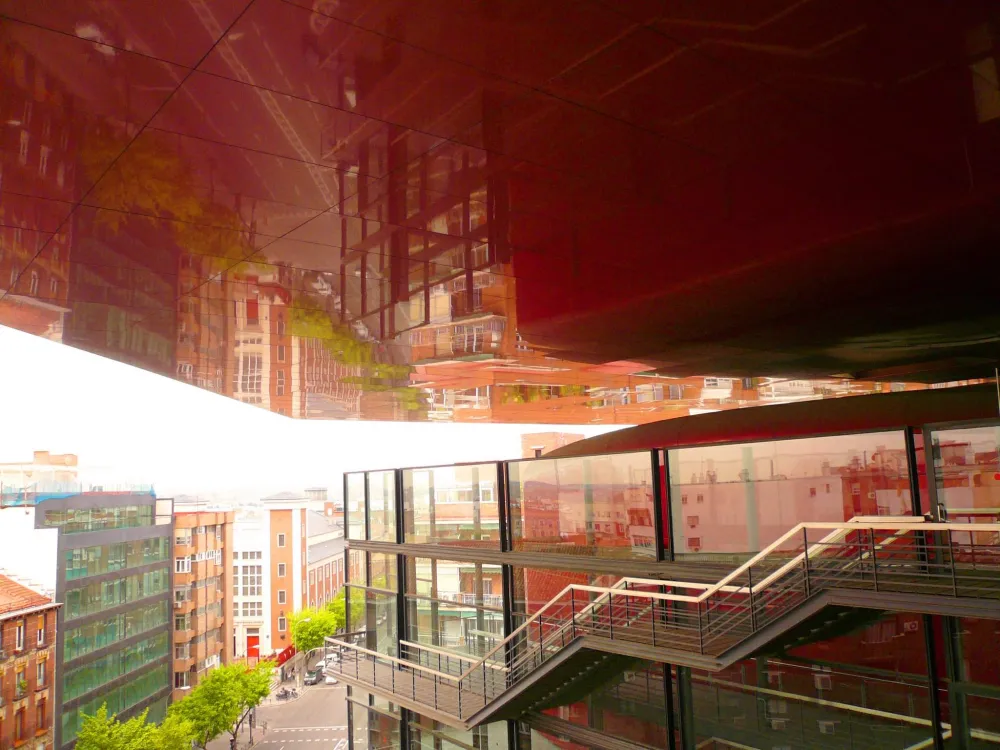
The collection is divided into two major chronological sections that the museum calls Collection 1 and Collection 2, plus the temporary exhibitions held in the Nouvel building.
- Collection 1 (1900–1945): Occupies the second and fourth floors of the Sabatini building. It covers the great avant-garde movements — Cubism, Surrealism, Dadaism — and interwar art. Guernica is here.
- Collection 2 (1945–present): Occupies the second and fourth floors of the Nouvel building. Post-war art, Informalism, Conceptual art, Minimalism and contemporary art up to the present day.
- Temporary exhibitions: In spaces of the Nouvel and Sabatini buildings, with a programme of international scope.
Pablo Picasso: the backbone of Collection 1
Although Picasso's name is associated above all with Guernica, the Málaga-born artist's presence in the Reina Sofía's collection goes far beyond that single work. The rooms leading to room 205.10 offer a journey through his artistic evolution: from his earliest work to Synthetic Cubism and his sculptural experiments.
The museum holds studies, drawings and paintings that allow us to understand how Picasso dismantled and rebuilt the conventions of representation. Seeing him in the context of his contemporaries — Juan Gris, Fernand Léger, Robert Delaunay — makes the leap to Guernica feel very different from going straight to room 205.10.
Salvador Dalí: Surrealism at its purest
The Reina Sofía holds some of Salvador Dalí's most important paintings, particularly from his mature Surrealist period. Among the highlights:
- The Great Masturbator (1929): One of Dalí's best-known works, a synthesis of his obsessions, fears and the dreamlike universe he constructed from Freud and paranoiac-critical imagery.
- Girl at the Window (1925): Painted when Dalí was barely twenty-one, it already displays a remarkable technical mastery. The figure — his sister Ana María — gazes out to sea from a window in Cadaqués.
- The Enigma of Hitler (1939): One of his most disturbing and political works, painted at the onset of the Second World War and full of unsettling symbolism.
These three works together allow us to trace Dalí's development from refined realism to the most complex Surrealist delirium, and to understand why he was one of the most influential — and controversial — artists of the 20th century.
Joan Miró: colour, form and a world of his own
Joan Miró's presence in the collection is especially rich and varied. The Barcelona-born artist developed throughout his life an entirely personal visual language — biomorphic, colourful, full of recurring symbols such as stars, moons, birds and schematic figures — that makes him one of the most singular creators of the 20th century.
The Reina Sofía holds paintings, sculptures and works on paper by Miró, with particular emphasis on his work from the 1930s and 1940s, when his language reached full maturity. The scale and chromatic joy of his large compositions contrast fascinatingly with the monochrome severity of Guernica, which hangs in the same building.
Juan Gris and Spanish Cubism
Juan Gris (Madrid, 1887 – Boulogne-sur-Seine, 1927) is perhaps the least well-known of the great Cubist trio — alongside Picasso and Léger — yet his contribution to the movement was fundamental. In contrast to the more intellectualised Analytical Cubism of his peers, Gris developed a Synthetic Cubism of great formal elegance: cleaner shapes, more vivid colours, compositions that combine Cubist fragmentation with an almost decorative clarity.
The Reina Sofía holds a significant selection of his work that reveals his singular position within the Parisian avant-garde and his relationship with the Spanish pictorial tradition.
Julio González: sculpture as drawing in space
Julio González (Barcelona, 1876 – Arcueil, 1942) is a key figure in the history of 20th-century sculpture, though his name is less familiar than those of his painter contemporaries. He was the first to explore wrought and welded iron systematically as a sculptural medium, creating works that resemble three-dimensional drawings suspended in mid-air.
His influence on subsequent sculpture — from David Smith to Eduardo Chillida — was enormous. The Reina Sofía's collection includes fundamental pieces from his mature output, made during the period when he worked in close collaboration with Picasso.
Post-war art: El Paso, Tàpies and Informalism
Collection 2 picks up where the first leaves off: in the Spain and Europe of the post-war years, with the world trying to process the trauma of the Second World War and, in Spain, Francoism imposing its official aesthetic of stale academicism.
Against that aesthetic, a generation of Spanish artists searched for new paths. The El Paso group, founded in Madrid in 1957, brought together painters such as Antonio Saura, Manuel Millares and Rafael Canogar, who adopted Informalism — gestural, material-based painting, stripped of any figuration — as both a form of expression and an act of cultural resistance.
Antoni Tàpies, working from Barcelona, developed in parallel a personal language rooted in the use of unorthodox materials — sand, marble dust, rags, rope — on canvas, creating surfaces that resemble walls and traces of time and memory. His works at the Reina Sofía rank among the most powerful in the entire collection.
Eduardo Chillida and the sculpture of space
Eduardo Chillida (San Sebastián, 1924 – 2002) is another of the collection's great names. His sculptures in wrought iron, alabaster and concrete explore the tension between material and the empty space that surrounds it; Chillida was interested not in form itself but in the space that form delimits and creates.
The Reina Sofía holds several important works from different stages of his career, allowing us to follow his evolution from early iron pieces to the large alabaster sculptures of his final decades.
Contemporary art: from the 1970s to the present
The collection does not stop with the great masters of the 20th century. The Reina Sofía has also built a strong collection of work from recent decades, with particular attention to Conceptual art, video art, performance and artistic practices that challenge the boundaries of the traditional art object.
The temporary exhibition programme — always of a high standard — complements the permanent collection and makes the Reina Sofía a place worth returning to: you almost never see exactly the same thing twice.
Discover the collection with a guide
The Reina Sofía's collection is so extensive that a guided tour makes all the difference: it helps you find your bearings, connect the works and not miss the key pieces.
See guided tours →⏳ Time-slot places are limited. Lock in your time · guided tour cancels free up to 24 h before.
Frequently asked questions about the collection
Which artists are in the Reina Sofía?
Picasso, Dalí, Miró, Juan Gris, Julio González, Antoni Tàpies, Eduardo Chillida and many more Spanish and international artists of the 20th and 21st centuries.
How many works does the Reina Sofía have?
More than 20,000 works in total, though only a portion is on display in the permanent collection. The selection on show is renewed periodically.
Which Dalí works are at the Reina Sofía?
Among the highlights: The Great Masturbator (1929), Girl at the Window (1925) and The Enigma of Hitler (1939).
Does the Reina Sofía only have Spanish art?
No. Although the collection focuses on 20th-century Spanish art, it also includes significant international work and temporary exhibitions featuring artists from around the world.
Content reviewed by the Ticket Visit team · June 2026.