What to see at the Reina Sofía: must-see works
The Museo Nacional Centro de Arte Reina Sofía (Reina Sofía Museum) holds Spain's largest collection of modern and contemporary art. From Picasso's Guernica to the twentieth-century avant-gardes, here is a guide to the works you simply cannot miss.
1. Picasso's Guernica (room 205.10) — the defining work
Guernica (1937) is the reason many travellers visit the Reina Sofía. Pablo Picasso painted this enormous canvas in black, white and grey as a response to the bombing of the Basque town of Guernica during the Spanish Civil War. More than 7.7 metres wide, the work combines fragmented figures, screams and chaos into a composition of overwhelming visual power.
It is displayed in room 205.10 of the Sabatini building, on the second floor. Arrive early or in the final hours of the day to enjoy it without the crowds. Take your time: the details of each figure — the bull, the wounded horse, the mother with her child, the bare light bulb — each tell their own story.
Book your ticket or guided tour
A guided tour brings Guernica's historical context to life and puts the rest of the collection in perspective. Skip-the-line access; the guided tour cancels free up to 24 hours before.
See tickets & tours →⏳ Time-slot places are limited. Lock in your time · instant confirmation.
2. Salvador Dalí: The Great Masturbator and Girl at the Window
The Reina Sofía holds one of the most important Dalí collections in Spain. The Great Masturbator (1929) is one of his most unsettling and recognisable surrealist paintings, filled with dreamlike imagery that blends attraction and repulsion. Girl at the Window (1925), painted before surrealism had fully defined his style, shows his sister Ana María gazing out over the bay of Cadaqués: a serene, luminous work very different from the Dalí most people know.
3. Joan Miró: colour, symbol and freedom
The permanent collection includes landmark works by Joan Miró, the Catalan painter who developed a visual language of his own through biomorphic shapes, primary colours and almost childlike symbols. His paintings radiate a playful, instinctive energy that stands in sharp contrast to the gravity of other works from the same era. Look out especially for the large canvases from the 1920s and 1930s.
4. Juan Gris and Cubism
Juan Gris (Madrid, 1887 – Boulogne-sur-Seine, 1927) was one of the great masters of Cubism alongside Picasso and Braque. His work, instantly recognisable for its precise geometry and restrained palette, is well represented at the Reina Sofía. His still lifes and musical-instrument compositions offer a masterclass in how to fragment reality to show multiple perspectives at once.
5. Julio González: iron sculpture
Julio González (Barcelona, 1876 – Arcueil, 1942) revolutionised modern sculpture by introducing iron welding as an artistic technique. His abstract figures and expressionist heads exerted a decisive influence on twentieth-century sculpture. The Reina Sofía holds an extensive collection of his work, spread across several rooms on the second floor.
Suggested route through the collection
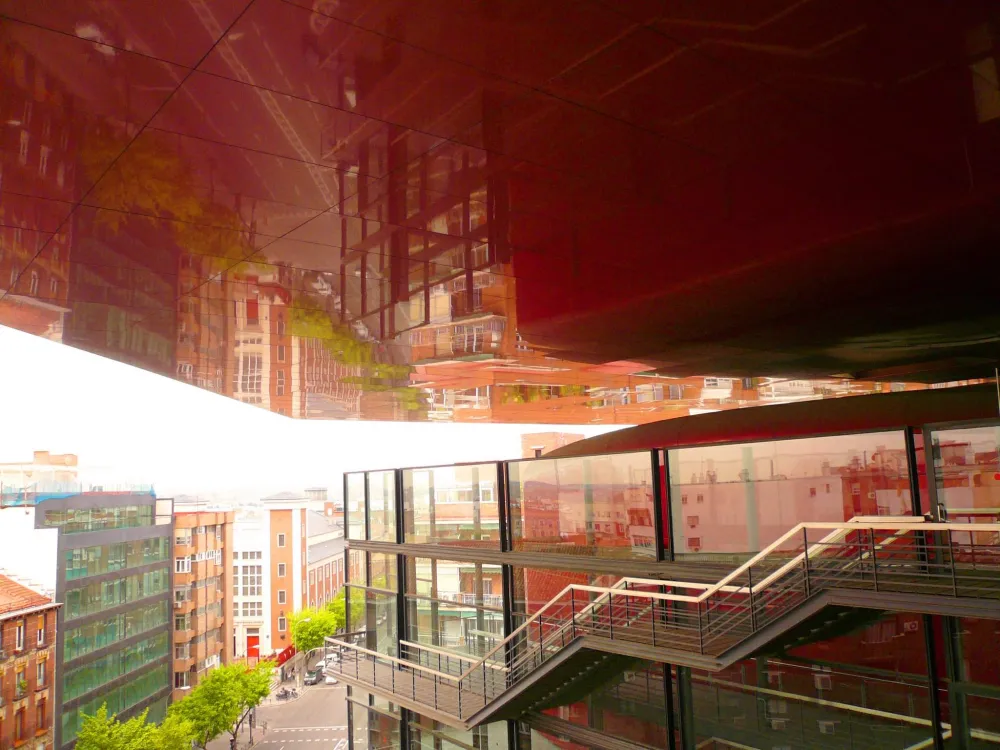
The permanent collection is divided between the Sabatini building (20th century up to the 1980s) and the Nouvel building (more recent art). For a first visit, we recommend starting on the second floor of the Sabatini, where Guernica is located, and then moving through the rooms dedicated to Cubism, Surrealism and the historical avant-gardes. The fourth floor covers works from the post-war period through to the 1970s.
- Second floor, Sabatini: Guernica (room 205.10), Dalí, Miró, Juan Gris, Julio González, Picasso pre-1937.
- Fourth floor, Sabatini: Spanish post-war art, Informalism, Equipo Crónica.
- Nouvel building: Art from the 1980s onwards, temporary exhibitions.
Tips for your visit
- The museum closes on Tuesdays. Monday and Wednesday–Saturday it is open 10:00–21:00; Sundays 10:00–14:30.
- The last two hours (19:00–21:00 on weekdays; 12:30–14:30 on Sundays) are free entry: it gets busier, but it is a good option if you only want to see Guernica.
- Booking tickets in advance avoids the ticket-office queue, especially in summer and at weekends.
- The ticket office and left-luggage are on the ground floor of the Sabatini. There is a café in the Nouvel building.
Frequently asked questions about the works
Which room is Picasso's Guernica in?
In room 205.10 of the Sabatini building, second floor. It is clearly signposted from the entrance.
How long does it take to see the Reina Sofía?
A visit to the essential works takes between 2 and 3 hours. To explore the entire permanent collection, set aside a full morning or afternoon.
Can you see Guernica for free?
Yes. During the free-entry hours (Monday and Wednesday–Saturday 19:00–21:00, Sundays 12:30–14:30) you have access to the entire collection, including Guernica, at no charge.
Content reviewed by the Ticket Visit team · June 2026.